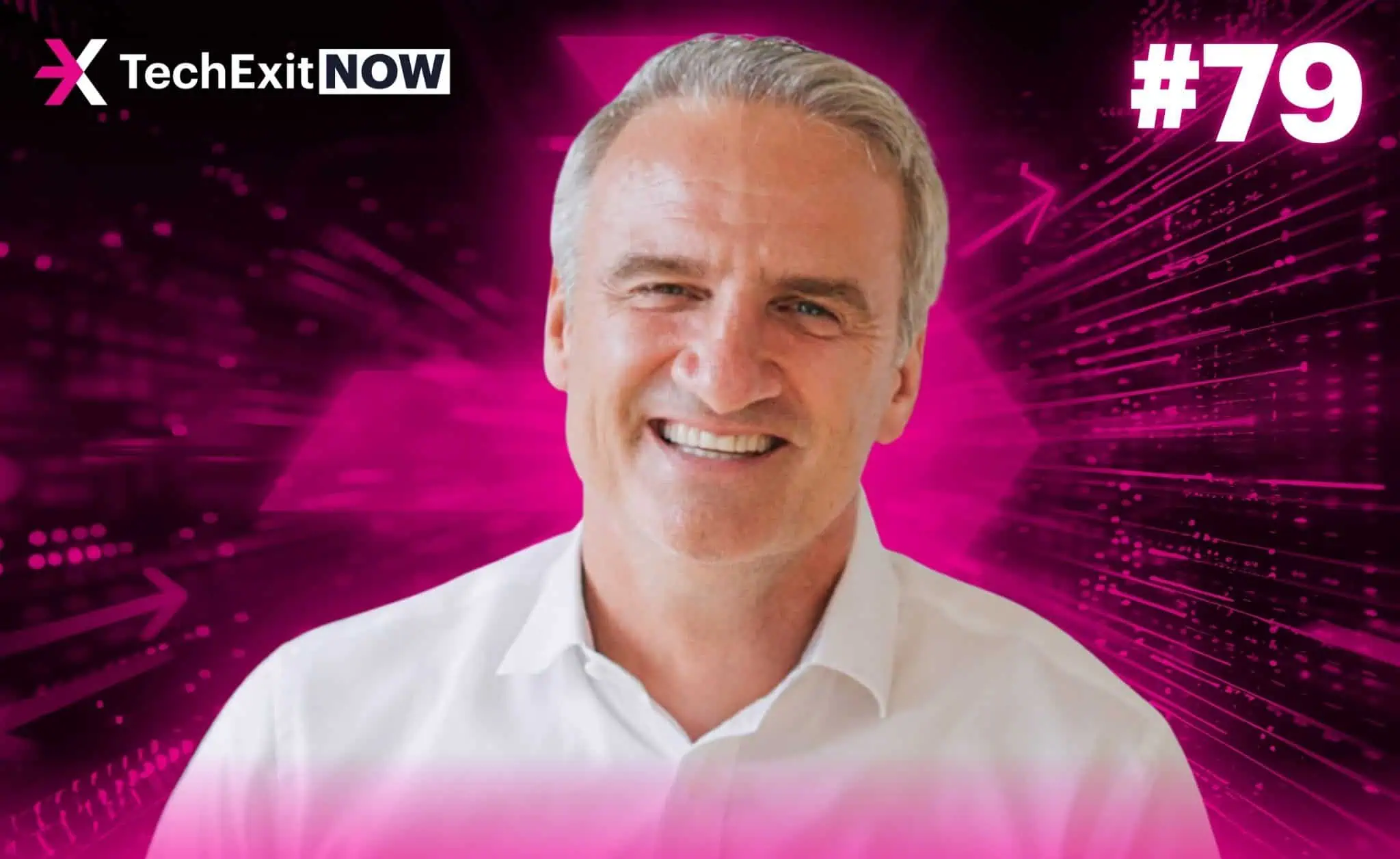
Most founders think about exit at some point. What often gets overlooked is how much of that outcome is shaped long before any process begins.
In a recent TechExit.io conversation, Michael Garrity, Executive Chair of Financeit, shared a perspective that reframes how founders should approach building and selling a company.
“Building a company just to sell it doesn’t make any sense,” he said. “It’s like getting into a marriage with the goal of getting a divorce.”
That idea shifts the focus. The strongest outcomes tend to follow companies that are built with care, consistency and a clear understanding of how value is created over time.
Key takeaways:
- Optionality is created through disciplined operating decisions, not timing
- Strong acquisition outcomes are built through long-term relationships
- Customer health is the foundation of valuation
It’s easy to assume growth leads to a strong outcome.
In reality, buyers focus on durability, how revenue holds up, how predictable it is, and how the business performs under pressure. Founders who understand that early build differently.

Build For Value Over Time
Michael’s view is grounded in how companies actually scale. Founders are solving real problems and doing it in a way that works at scale and holds up financially.
“The goal is to solve a market problem, to solve it at scale and to solve it at scale profitably.”
That shows up in day-to-day decisions. Staying close to customers, paying attention to unit economics and expanding into areas that make sense.
Companies that operate this way tend to attract interest naturally. Buyers look for businesses that still have room to grow and where momentum can continue.
“They want to know the best days are still in front of the company.”
Readiness Happens In The Background
Preparation is often misunderstood as something that starts late. In practice, it begins much earlier and is built into how the company runs.
Michael described asking his team a simple question early on.
“What are the things that if we had to write them in an S-1 would stop someone from buying our IPO?”
That question led to practical changes. Financial reporting became more disciplined, risks were addressed and systems were strengthened.
“You can’t control the timing but you can control the foundational components of what makes a company sellable.”
Those foundational elements compound over time and shape how a company is perceived when it eventually comes under review.
Relationships Build Context
Partnerships and relationships play a larger role than many founders expect.
Michael approached them with a long-term lens and often asked what it would take for a partner to see the business as something they would want to own.
“What would this partner need to see to want to own the whole business?”
That thinking drives clarity around product, operations and positioning. It also helps founders understand how their company fits into a broader ecosystem.
Over time, this creates familiarity and trust which can make future conversations more straightforward.
ADVERTISEMENT

One day to learn from 9+ operators who’ve built, scaled, and sold some of the fastest growing companies in North America. Save your seat: www.revstarsummit.com
Liquidity & Focus
Liquidity can influence how founders and teams think about the future.
“If the only way to get liquidity is to sell the company prematurely that’s when people take their eye off the ball.”
Having some liquidity at the right stage can reduce pressure and allow the team to stay focused on building. It creates space to continue operating without feeling forced into a single path.
Timing remains important. Michael shared an example of a company that took significant secondary before finding product market fit and saw its value decline later.
The underlying strength of the business determines whether liquidity supports growth or creates distraction.
Deciding When To Sell
Even with strong fundamentals, timing an exit isn’t straightforward.
Some founders sell earlier and leave room for future growth. Others wait and face changing market conditions.
Michael has seen both outcomes play out.
Some companies could have been worth more if they had continued building, while others passed on opportunities that didn’t come back later.
That uncertainty is part of the process.
“Now what you have to figure out is whether this is the best offer you’re going to get or if you can build something bigger.”
The stronger the business, the more credible each path becomes.
Final Thought
This conversation reinforces a simple idea. Exit is shaped by how a company is built long before a transaction is considered.
That shows up in how founders manage risk, how they structure their operations and how they think about growth over time.
It also reflects the direction TechExit.io continues to build toward.
The focus is on helping founders develop companies that create options whether that means raising capital, exploring acquisition or continuing to scale independently.
Through conversations like this, founders gain a clearer understanding of how buyers evaluate businesses and how decisions are made.
The outcome is not just a stronger exit.
It’s a stronger company. TechExit.io: Learn how to acquire or get acquired. Join us in our newest TechExit.io Calgary as we continue exploring how founders can build companies that command strong outcomes in today’s market.