After a year of negotiations and $150,000 in legal and diligence costs, the deal collapsed. Eighteen months later, he secured a $75M private equity investment on far better terms.
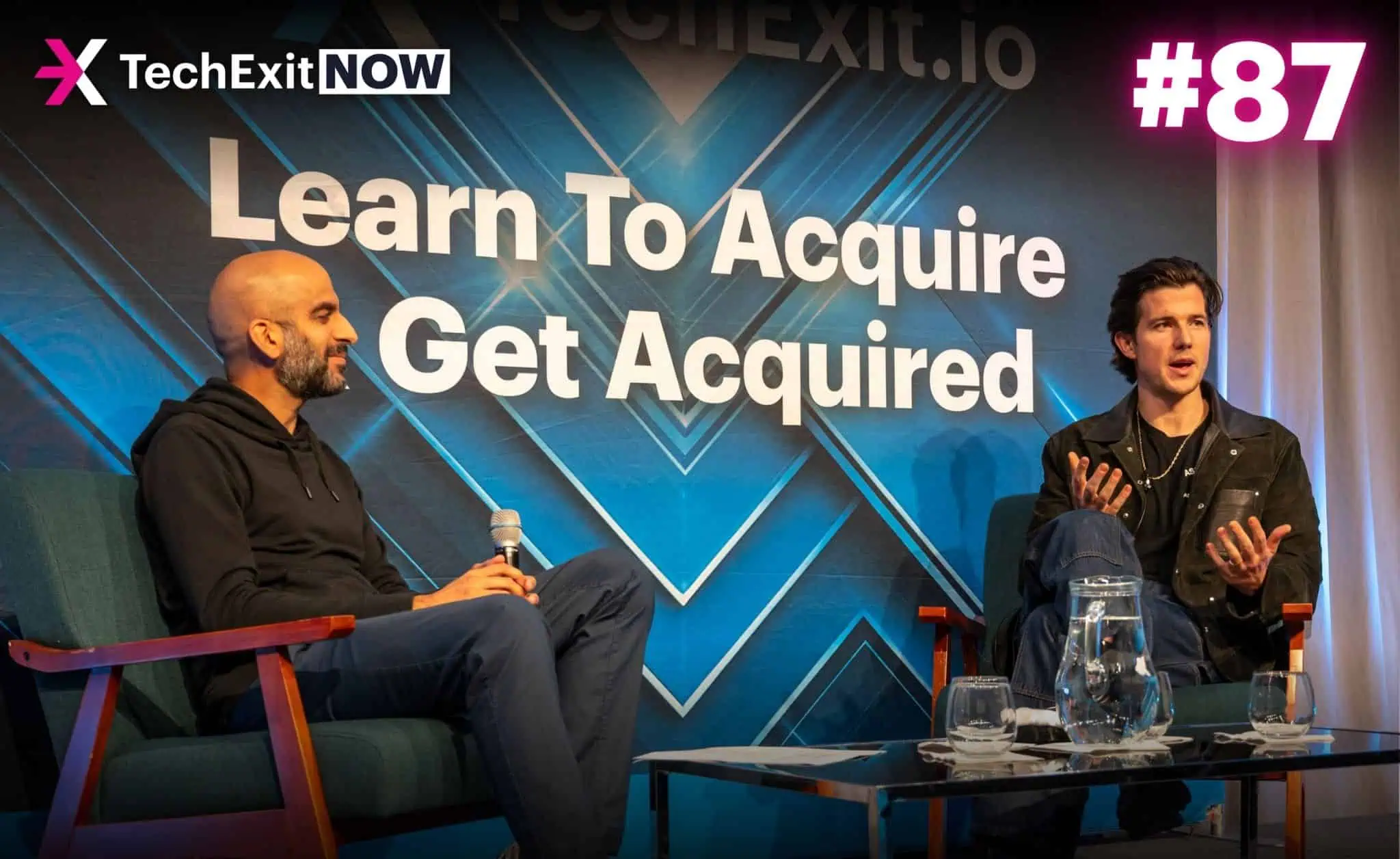
At TechExit.io Toronto, David Wilkin, Serial Entrepreneur behind 10KC, ROADS Daily and Chapter Two Labs, joined Ali Asaria, Co-Founder of Transformer Lab and Founder of Well.ca, to share what he learned about failed deals, negotiating with investors and the unexpected challenges of life after an exit.
Key takeaways:
- Build resilience. Strong businesses can withstand failed deals.
- Protect your leverage. Know your investors and scrutinize buyers.
- Plan beyond the exit. Prepare for the personal transition.

From A Failed Acquisition To A Better Outcome
Less than two weeks before closing an acquisition, David Wilkin watched a year of negotiations unravel. The buyer walked away, leaving 10KC with significant legal costs and an uncertain future.
It was a difficult setback for a company David had bootstrapped from a mentoring platform called 10,000 Coffees into an enterprise software business serving more than 200 organizations worldwide, generating over $10M in software revenue without institutional investment.
“I will never forget that call and I will never forget the weeks after that.”
Looking back, David acknowledged warning signs his lawyer had raised. Rather than rush into another transaction, the team returned its focus to growing the business.
“We kept going, put our heads down, and about a year and a half later, we closed a deal worth five times more, with a much better partner.”
His experience illustrates why strong fundamentals and financial independence matter. They give founders the ability to withstand failed deals, retain negotiating leverage and pursue better opportunities.
How 200 Investor Contacts Became Eight Term Sheets
What began as a spreadsheet of unsolicited investor emails eventually helped David secure eight competing term sheets.
For three years, he tracked the investment firms contacting 10KC, asking junior analysts who held the relevant mandates, what their firms were looking for and how much capital they could deploy.
By the time 10KC was ready to explore investment, he had gathered intelligence on approximately 200 partners.
“It gave me a clear picture of which funds were investing in learning technology, what they were looking for, their typical cheque sizes and minimum investment requirements.”
Armed with that information, David took an unconventional approach to pitching. He started with his ten least-preferred investors, using those conversations to expose weaknesses in the company’s presentation, contracts and data room.
“We went to them first so that we could make all of our mistakes.”
Each round helped refine the company’s approach before meetings with more desirable investors.
The strategy generated eight term sheets ranging from approximately $75M to $90M, with nine-figure enterprise valuations. Five Elms Capital, one of the last firms David contacted, ultimately became the investment partner.
By approaching investors in stages, David was able to improve his pitch, understand his options and create competition before committing to a deal.
The Question Every Founder Should Ask A Buyer
A strong offer means little if the buyer cannot deliver.
Having experienced a failed acquisition, David became more deliberate about assessing prospective investors. His most practical advice was to request a detailed timeline from term sheet to closing.
“I asked them for a clear timeline outlining every step from signing the term sheet to receiving the funds.”
Serious buyers could identify their diligence providers, decision-makers and key milestones. Those offering vague timelines or resisting requests for details raised concerns.
For David, that clarity was essential given the demands a transaction places on a founder.
“Pursuing a deal means taking my focus away from running the business, and that’s a significant risk.”
He applied the same scrutiny throughout diligence.
“Interview them as much as they’re interviewing you.”
During negotiations with Five Elms, David maintained regular contact with the firm’s partners, building trust while assessing how they would work together.
The investment closed just four and a half weeks after signing the term sheet.
His experience offers a useful reminder that founders should evaluate a buyer’s ability to execute, alongside the financial terms being offered.

The Unexpected Reality Of Life After An Exit
For David, the most difficult period came after the deal closed.
Having spent years managing the pressures of entrepreneurship, he expected financial success to bring relief. Instead, he experienced severe anxiety, panic attacks and prolonged sleep disruption.
“It was one of the most difficult periods of my life for my mental health. I struggled to sleep for an entire year.”
Ali recognized the experience from conversations with other founders who had sold their companies.
“Almost every founder I’ve spoken to who has sold a company has shared a similar experience.”
David struggled with the sudden loss of structure and responsibility that had defined his working life. The financial outcome also brought unfamiliar pressures, particularly around managing and protecting his newfound wealth.
He eventually sought support from a therapist experienced in working with entrepreneurs, rebuilt his sleep habits and took time to recover.
“I wish more accountants, lawyers and banks helped founders prepare for both the financial and emotional challenges of an exit.”
His experience raises an important consideration for founders approaching liquidity. Financial, legal and tax preparation can help protect the proceeds of a transaction, but planning for the personal transition deserves equal attention.
Choosing What Comes Next
After recovering from the transition, David faced another question: what did he want to build?
Rather than immediately pursue another high-growth technology company, he began meeting entrepreneurs, exploring new industries and mentoring founders preparing for their own exits.
His next venture, ROADS Daily, grew from an unlikely starting point: a lifelong interest in socks.
Combining that passion with an AI-enabled supply chain model, David found an opportunity that genuinely excited him.
“The most important thing is I had to really care.”
Having experienced both the rewards and pressures of building 10KC, he was less concerned with pursuing another enormous valuation.
“I think the worst thing you could do is start a business because it might exit.”
For David, the next chapter was an opportunity to build around something he enjoyed, with the freedom to define success differently.
Building Value Without Waiting For The Perfect Exit
David’s journey from a failed acquisition to a $75M investment shows why founders should build options long before pursuing a deal.
From cultivating investor relationships to assessing potential buyers and navigating life after an exit, his experience offers lessons that extend well beyond the transaction.
At TechExit.io Toronto, David and Ali shared the decisions, setbacks and personal realities behind a successful outcome, reminding founders that preparation matters as much as the deal itself.
Explore more founder stories and M&A insights at TechExit.io.