Not every acquisition begins with a company deciding it’s time to sell.
Some begin with a conversation neither side realizes will matter years later.
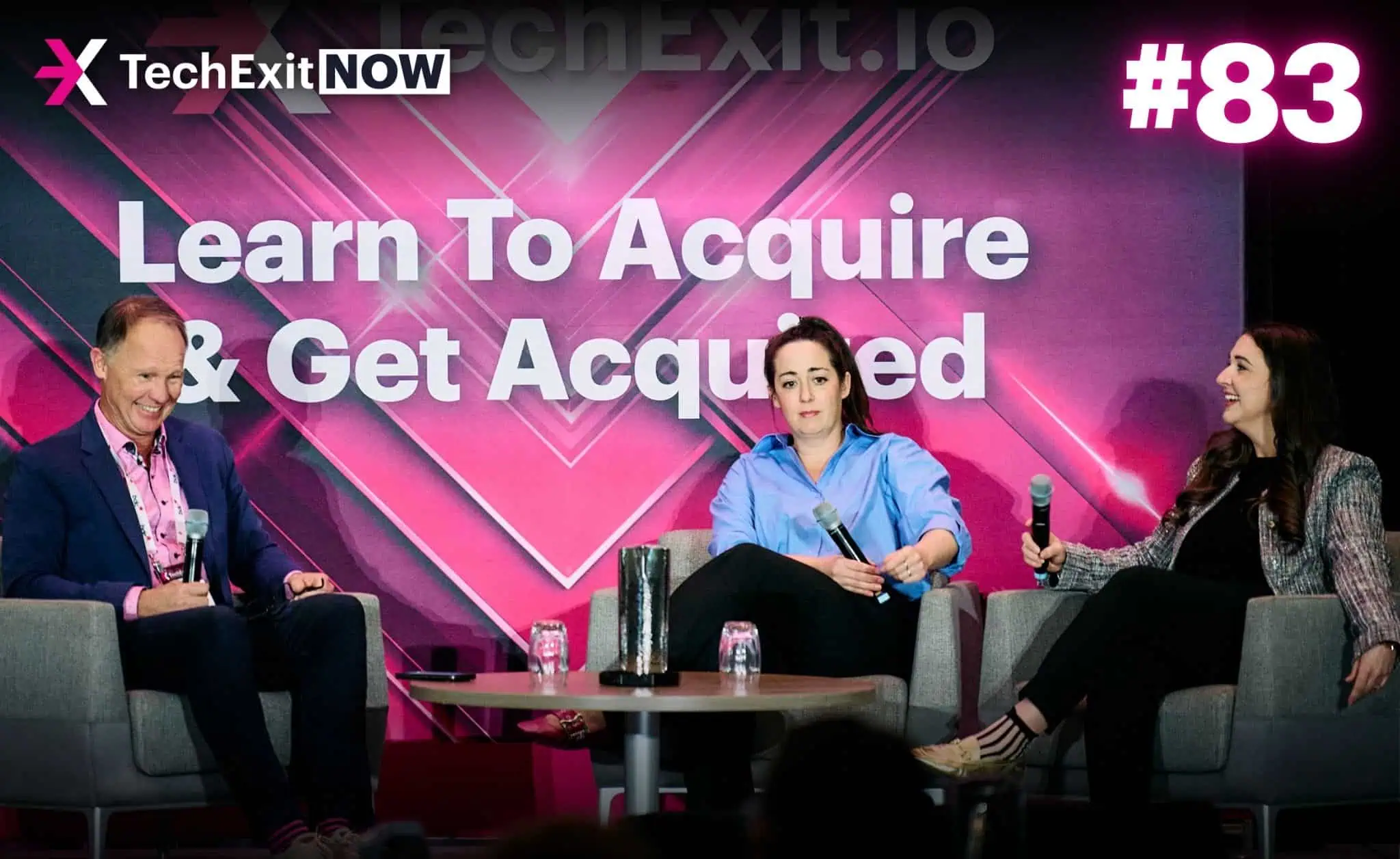
At TechExit.io Vancouver, Brianna Blaney, CEO & Co-Founder of Pocketed, and Aria Hahn, Co-Founder & CTO, joined Brent Holliday of Garibaldi Capital Advisors to reflect on Pocketed’s acquisition by Deloitte Canada. The discussion wasn’t really about how the deal happened. It was about everything that happened before it.
Looking back, the acquisition almost feels like the final chapter. Most of the story had already unfolded.
Key takeaways:
- Relationships often shape acquisitions long before a company is for sale
- Strategic fit can matter as much as valuation
- Leverage comes from building a business with genuine choices

The Conversation Started Long Before The Deal
Pocketed wasn’t running a sale process.
The company wasn’t approaching buyers, hiring advisors or preparing a competitive auction. During a dinner hosted by StandUp Ventures and Deloitte, Brianna found herself sitting across from the person who would eventually champion Pocketed’s acquisition inside Deloitte.
At that point, an exit wasn’t part of the plan. The founders were focused on growing the business independently. Looking back, though, Brianna realized those early conversations had served another purpose.
“We realized in hindsight that was really, in some respects, the beginning of diligence.”
Deloitte first became a customer through a pilot, but the relationship was already developing long before acquisition discussions formally began. By the time both sides sat down to talk about a transaction, there was already trust, familiarity and a shared understanding of how the business operated.
Value Is Built Long Before It’s Measured
Looking back, it became clear Deloitte wasn’t buying a single product or milestone. It was buying a business that had spent years learning where customers found the most value.
Pocketed had built technology that solved a real problem, but the founders were equally focused on understanding how customers wanted to buy, use and receive that solution. More than 25,000 businesses were using the platform by the time Deloitte acquired the company, giving it access to a customer segment it was actively looking to serve.
That progress didn’t come from following the original plan.
Like many founders, Brianna and Aria discovered that some of their strongest decisions came from listening to customers rather than protecting assumptions. They initially resisted adding service offerings alongside the software because it felt like moving away from the SaaS company they wanted to build.
“Our business model evolved and we tried a marketplace and it failed miserably. Then we built out service functions and it was substantially more successful.”
The shift wasn’t just a new revenue stream. It made the business more useful to customers and, ultimately, more valuable to an acquirer.
The Best Deal Isn’t Always The Biggest Deal
As acquisition discussions progressed, Brent’s instinct as an M&A advisor was to widen the process, introduce competitive tension and bring more buyers into the conversation.
The founders were less interested in creating an auction than in understanding where Pocketed would have the greatest chance to continue growing. By that stage, they already knew the Deloitte team they would be joining and believed the business could continue operating with a high degree of autonomy after the acquisition.
Brianna explained that every decision came back to three groups.
“It had to be great for our people.”
It also had to be the right outcome for customers and investors.
That perspective shaped the conversation. Valuation was part of the decision, but it wasn’t the decision itself. The question became less about who would pay the most and more about who was best positioned to build on what the team had already created.

Integration Is Where The Real Work Begins
Closing the transaction solved one challenge and immediately introduced another.
Pocketed moved from a four-year-old startup into the world’s largest consulting firm almost overnight.
“We basically did the extreme thing.”
New governance processes, compliance requirements and operating structures appeared almost immediately. Looking back, Brianna admitted they hadn’t fully appreciated the difference between the business leaders championing the acquisition and the corporate development team responsible for negotiating it.
“They’re not bad people. They just have a job to do.”
Once the transaction closed, those teams largely disappeared and the founders began working with the people who had originally believed in the business.
The operational changes were only part of the challenge. Employees who hadn’t spent months discussing the acquisition suddenly had employment agreements to review, compliance training to complete and customers who still expected the same level of service.
“I remember having to go back to the team and say, ‘It’s not in your head. This is really, really hard.'”
That honesty helped the team navigate a period of uncertainty together.
Why Relationships Create Optionality
It’s tempting to look at Pocketed’s story and assume Deloitte simply arrived at the right moment.
The reality unfolded much more gradually.
Pocketed wasn’t looking for an acquirer. It had built technology customers valued, earned credibility in the market and developed relationships that created trust over time.
As Brianna reflected:
“We were not for sale. We were not selling Pocketed. We were very much approached and bought.”
The acquisition itself happened over a matter of months. The conditions that made it possible had been developing for years.
Final Thought
Every acquisition has its own story, but Pocketed’s highlights something founders often overlook.
By the time Deloitte made a formal offer, the firm already understood the business, trusted the founders and believed in where the company was heading.
That didn’t happen because Pocketed was preparing to sell. It happened because the team spent years building something worth paying attention to.
That idea continues to shape TechExit.io’s focus on value creation and optionality. The companies with the strongest negotiating position are rarely the ones preparing for a transaction. More often, they’re the ones that have spent years building a business that creates genuine choice when opportunities emerge.
The strongest buyers rarely arrive as strangers. They’ve often been paying attention for much longer than founders realise.
Those conversations continue at TechExit.io Calgary this October, where founders, operators, investors and advisors will explore how durable value is built long before an exit becomes part of the conversation.