In March 2026, founders are thinking carefully about liquidity. Strategic buyers remain active, IPO windows are selective and deal structures require patience. Exit conversations are happening earlier and more often inside boardrooms.
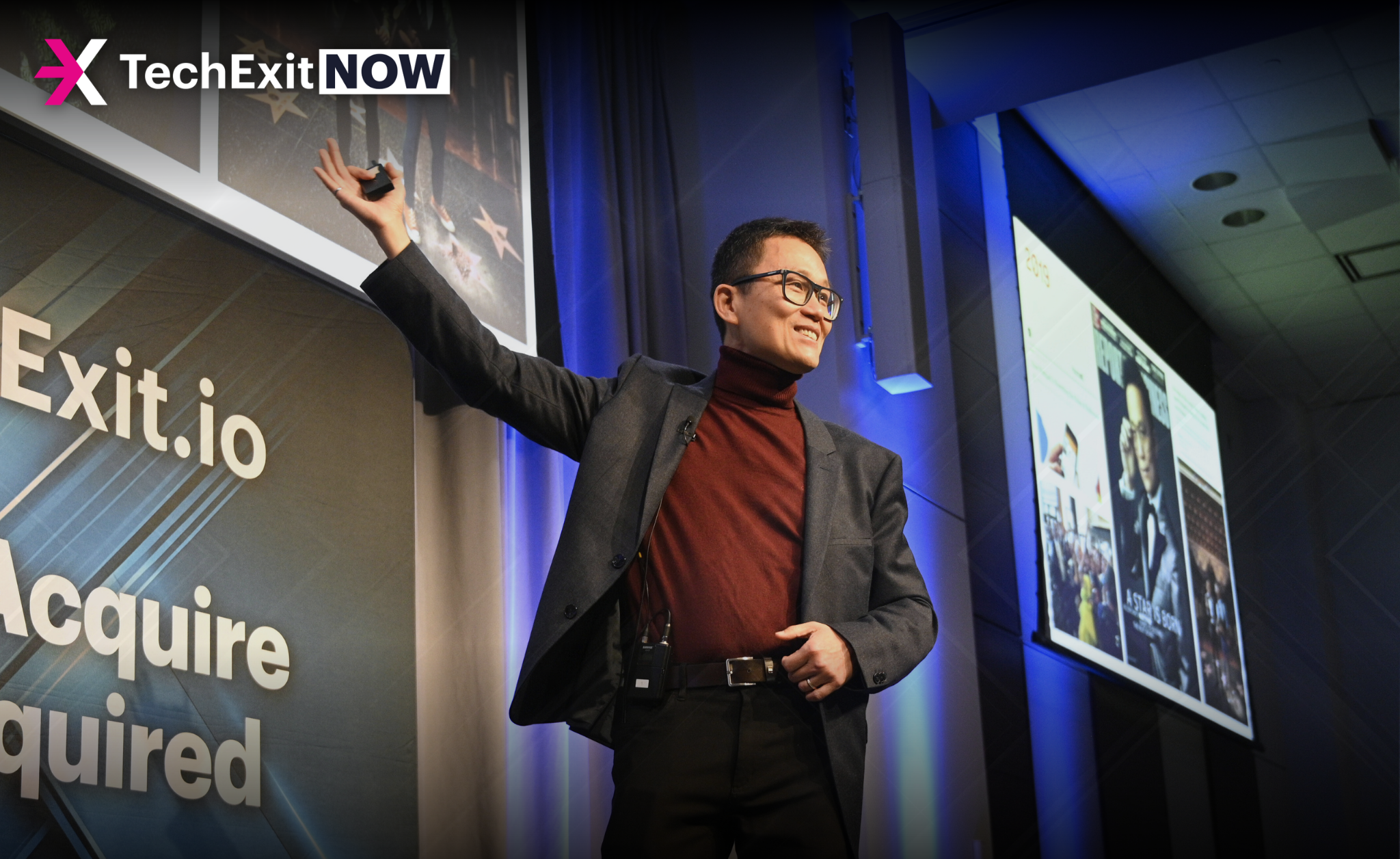
At TechExit.io Toronto, Allen Lau offered a perspective that feels increasingly relevant. Drawing from his experience building Wattpad and guiding it through a $754M CAD acquisition by Naver Corp., he spoke about exits from a position of long-term discipline rather than short-term ambition.
“The best exit strategy, not having one, focus on building a great company, but do the prep work.”
His message was simple. Focus on building something durable. Do the preparation. Let optionality create leverage.
Key takeaways:
- Optionality creates negotiating power
- Long-term relationships shape stronger outcomes
- Emotional readiness affects decision quality
- Exit-driven decisions can weaken fundamentals
- World-class companies attract opportunities

Optionality Gives You Real Leverage
Allen spoke plainly about negotiation power.
“Want a good deal? Optionality is everything.”
During Wattpad’s negotiations, he described being able to look potential acquirers in the eye and say:
“Your price is too low. We are going to walk away. I could get much more if we go IPO.”
He emphasized that those words only carry weight when they are credible. Without the ability to continue independently, walking away is a threat. With it, walking away becomes a choice.
In 2026, buyers can sense the difference. Companies that are growing sustainably, operating profitably and have credible alternative paths command a different level of respect in negotiations. Optionality is not created at the signing table. It is built over years of disciplined execution, financial strength, and operating resilience.
Relationships Compound Quietly
Allen also reflected on Wattpad’s long relationship with its bankers.
We had known our bankers for six years, so they understood the business deeply. They added real value and understood the math behind it.
He cautioned founders against treating bankers as temporary vendors.
“A lot of the mistakes that we have seen from founders is that they treat the bankers as an outsource provider. ‘Here you go, help me get the deal done. Let me get back to work.’ It doesn’t quite work this way.”
In a selective M&A environment, familiarity builds conviction. Advisors and bankers who understand the company over time can frame its value with depth. They know where the leverage is and where the risks lie. That context often influences both price and process.
Founders who invest in these relationships early tend to approach transactions with more stability and less urgency.
Emotional Readiness Matters More Than Founders Expect
One of the most striking stories Allen shared was about a founder who was ready to sign his deal.
“There was one founder and CEO, pretty much he has all the paperwork done minus the final signature. And on the day of signing, no one could find him. He was crying in the forest. He could not let go. Easier said than done.”
He followed with a warning.
“If you are going to go through that during the four weeks when you are negotiating the deal of your lifetime, you are not going to make the right decision. Be mentally prepared. I cannot emphasize this more.”
In today’s market, many exits include earnouts or multi-year commitments. Founders are not simply transferring ownership. They are entering a new chapter with new dynamics and expectations. Mental clarity protects decision quality at a moment when emotions can easily cloud judgment.
Exit-Driven Decisions Can Quietly Erode Value
Allen was candid about what Wattpad chose not to do.
“We were not doing stupid deals because we thought someone might buy us in two years. We were not forming partnerships just to position ourselves for an acquisition. We did not do any of that.”
He also reminded the room:
“Large acquisitions are rarer than you might think.”
When companies shape product roadmaps or partnerships around perceived acquisition paths, they risk compromising long-term value. Short-term positioning rarely strengthens fundamentals.
Wattpad focused on building a strong product and community. When Naver and Webtoon saw alignment with their broader ambitions, the opportunity emerged.
“You have to be in the right place at the right time with the right people.”
That positioning was the result of sustained execution, not exit choreography.
Build The Company First
Allen shared a telling reflection about his board over a decade.
“During those 10 years, our investors never once asked for an exit strategy. We never talked about how we would exit in a board meeting.”
At one point, he recalled being stopped mid-conversation.
“Alan, stop. I don’t want you to talk about this. I just want you to build a great company.”
That discipline allowed Wattpad to focus on product depth, community engagement, and global growth.
“So building a world-class company would enable us all the optionality, including secondary, including M&A, including IPO.”
The exit became one of several possible outcomes rather than the goal itself.
Final Word For Founders
As founders navigate 2026, liquidity conversations will continue. Markets shift. Windows open and close. Structured deals become more common.
Allen Lau’s perspective offers a steady reminder:
- Build strength first
- Maintain optionality
- Invest in relationships
- Prepare emotionally and operationally
When a company is truly durable, opportunities tend to arrive from a position of alignment rather than urgency.
TechExit.io: Learn how to acquire or get acquired. Join us in our newest TechExit.io Calgary as we continue exploring how founders can build companies that command strong outcomes in today’s market.