Every founder wants optionality, whether it’s more paths, more leverage or better outcomes.
But here’s the reality: most companies don’t get options. They get boxed in by early decisions, rushed fundraising or market myopia.
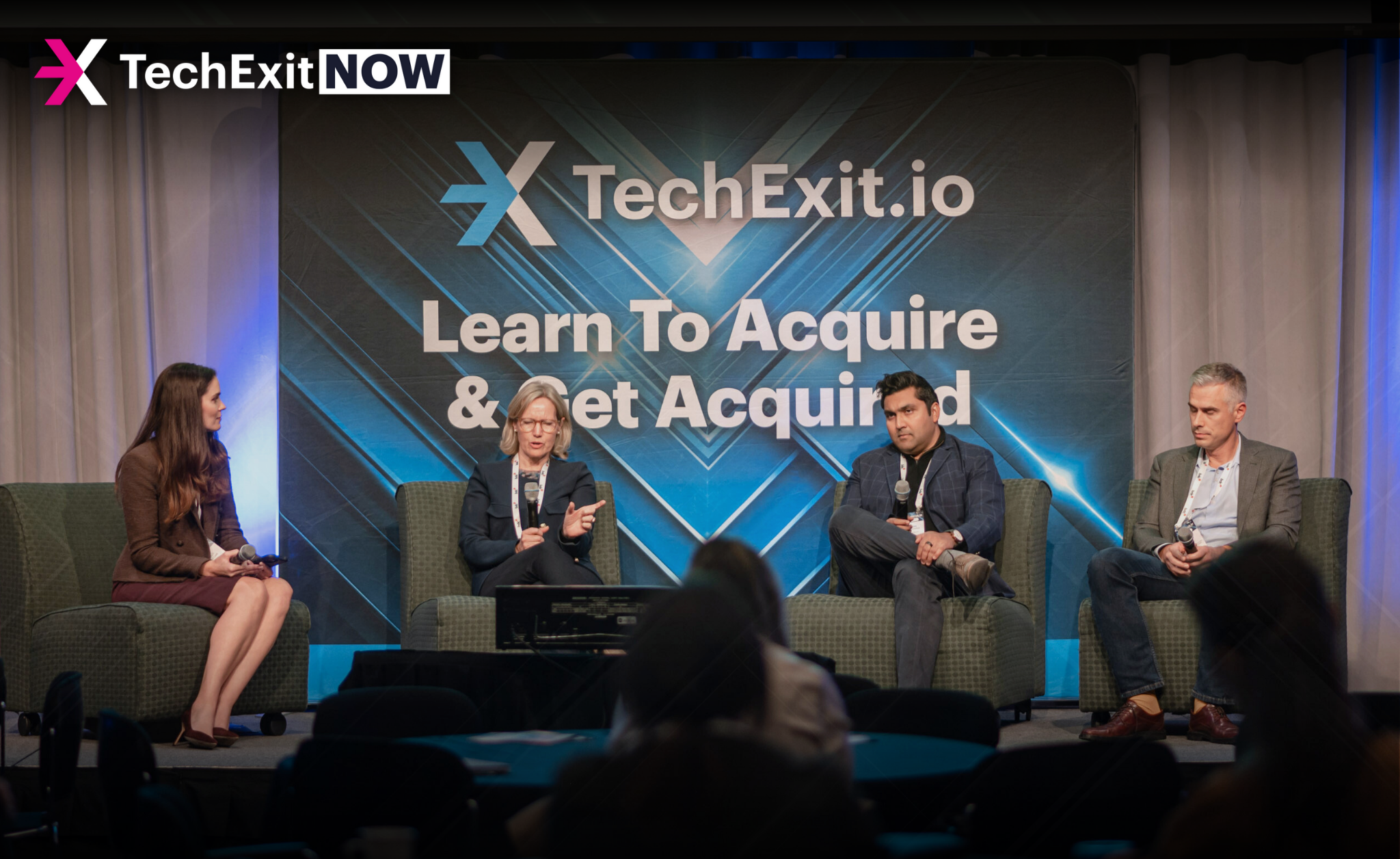
At TechExit.io Toronto, moderator Julia Kassam led a panel of seasoned insiders including Petar Zelic (Stifel), Rhiannon Davies (Sandpiper Ventures), and Shamil Hargovan (STS Capital Partners) who broke down exactly how exits really happen in today’s environment, and why founders need to stop treating M&A as a future event and start treating it like a long-range strategy.
This was real talk from people who’ve sold companies, taken them public and advised on billion-dollar deals across markets.
Key takeaways:
- Early-stage governance decisions have long-term consequences
- Most Canadian companies need to think M&A, not IPO
- Global traction is essential to command global valuation
- Messy cap tables quietly kill good businesses

This article unpacks the insights shared on stage at TechExit.io, giving founders a clearer lens on how to build real exit optionality before the pressure hits.
Exit Readiness Is A Mindset
“Most founders treat M&A like something that happens after they’ve built the business,” said Shamil. “But it’s just like product. You don’t ship without planning. Exits are the same.”
This shift, from reactive to strategic, is the core of what separates high-leverage founders from those forced into fire sales or awkward pivots.
“The best exits we’ve worked on started two years out,” Shamil explained. “They weren’t perfect companies but they were prepared.”
If You Want Control Later, You Have To Structure For It Early
Control is what creates real optionality and control comes from early-stage decisions most founders treat as boilerplate: board seats, investor rights, governance frameworks.
“Even a 5% board member can blow up your autonomy,” said Rhiannon. “So, I tell every founder: forget chasing the highest valuation. Protect your decision-making ability.”
Founders who gave up too much too early often find themselves stuck, unable to pivot, exit, or raise again on their own terms.
As Petar put it, “nepotism kills.”
A board stacked with friends or early backers may feel good now but it won’t get you through diligence or maximize your outcome.
“Diverse, independent boards lead to better governance, better exits, and higher valuations,” Petar added. “Buyers notice.”
Most Companies Won’t IPO. And That’s Okay—If You’ve Planned For Other Outcomes
The panellists were unanimous: Canadian founders over-index on IPOs and under-prepare for the far more likely path, M&A or growth equity.
“Canada hasn’t had a real IPO wave in years,” said Petar. “The bar is high, and most companies won’t clear it.”
Instead of waiting for a perfect IPO window, founders should treat M&A as a primary outcome and align their operations, positioning, and proof points accordingly. That includes who you’re selling to, and what narrative you’re building.
As Shamil put it, “Most exits don’t happen because you planned it. They happen because you were ready when someone showed up.”
Canadian Founders: Stop Thinking Like A Canadian Company
One of the most urgent takeaways? Domestic traction isn’t enough.
“If you want to command a global valuation, you need global proof,” Petar said. “Sell to US clients. Show buyers you’re not limited by borders.”
“Canada doesn’t have the population to support true commercialization,” added Rhiannon. “Your first market doesn’t need to be your home market. It needs to be the right market.”
Canadian companies too often stay local until it’s too late undervaluing themselves in the process. Thinking and selling globally isn’t a late-stage strategy. It’s foundational.
Structure Is Strategy. Clean It Up Now.
What kills deals? It’s not product. It’s structure.
Petar shared how messy COVID-era cap tables, misaligned investor preferences, and short-term fundraising choices are quietly derailing otherwise healthy businesses.
“There are companies that can’t exit, not because they’re bad, but because their structure is broken.”
And when that happens, founders aren’t negotiating. They’re boxed in.
“Take the capital that gives you flexibility,” Rhiannon said. “Not just the capital that gives you a headline.”
The Real Optionality Playbook
Optionality isn’t about having three exit paths when the time comes. It’s about making hundreds of decisions over years that keep all those paths open.
Founders who win don’t build toward an exit. They build toward readiness. Strong governance. Global traction. Clean structure. Leverage rooted in actual performance.
“You’re not building a business to sell,” Rhiannon said. “You’re building the best business possible, so when the time comes, you can sell it well.”
TechExit.io: Learn how to acquire—or get acquired. Join us at TechExit.io Vancouver to hear the next wave of acquisition stories, meet the dealmakers shaping Canada’s tech landscape, and learn how to build real optionality into your company’s future.