If you’re building toward an exit, it’s easy to focus on growth, revenue, and headline numbers.
But when buyers step in, they’re not just evaluating what you’ve built, they’re evaluating risk, durability and what could go wrong after they take over.
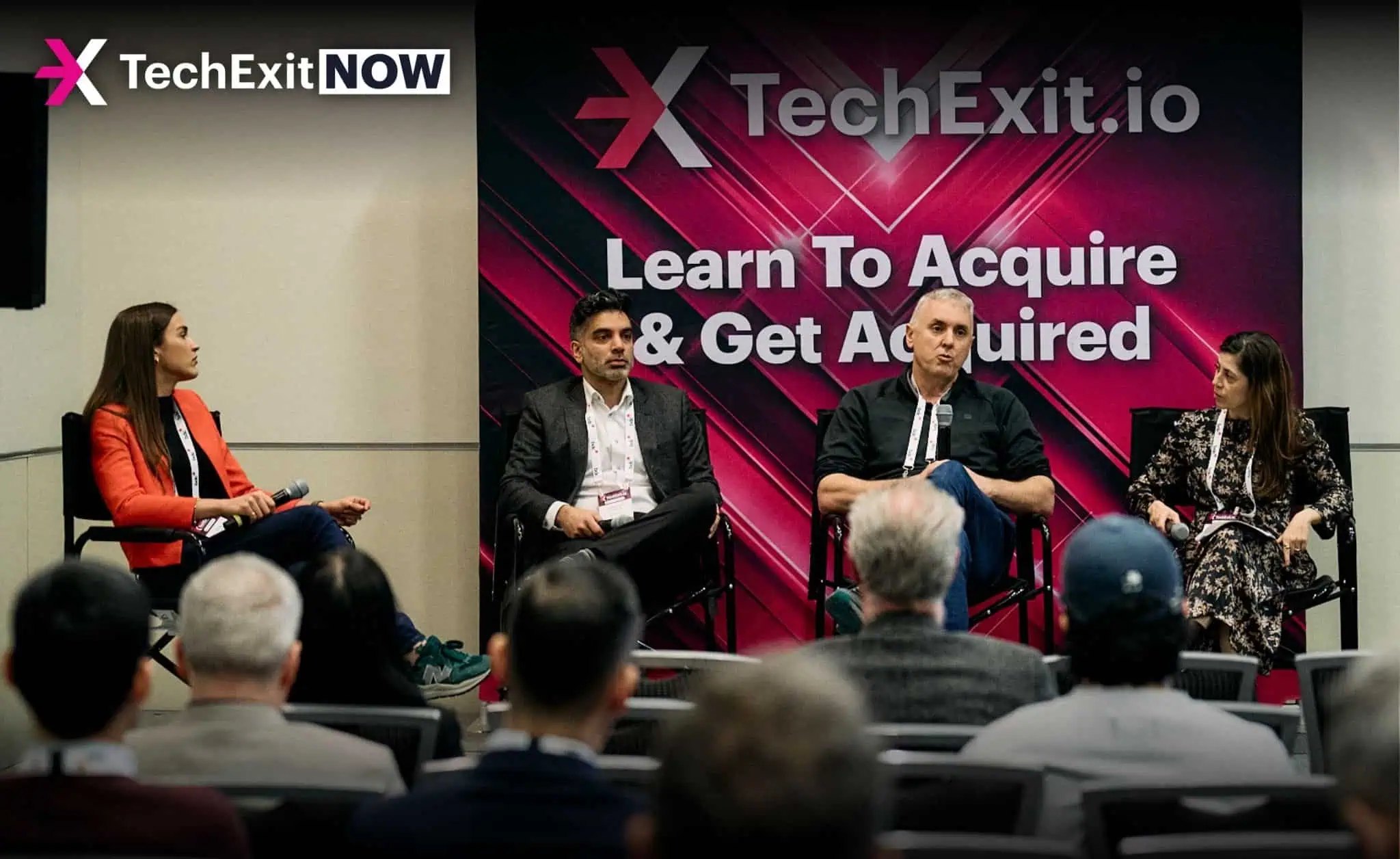
At TechExit.io Vancouver, moderator Paige Addesi (Explora Partners) sat down with Randeep Janjua (BDC Capital), David Thomas (Terra Dygital), and Maryam Zargar (Miller Thomson LLP) to unpack what’s really driving deal outcomes today.
What came through clearly as an underlying theme was that the best deals don’t happen because a company looks good on paper. They happen because the fundamentals hold up under pressure and the story makes sense from the buyer’s side.
Key takeaways:
- Retention and customer quality matter more than top-line growth
- Deal structure is about risk (not just valuation)
- Most deal friction is predictable and avoidable
- What happens after close matters just as much as the deal itself
It’s easy to assume a strong business will naturally lead to a strong outcome.
But buyers don’t think that way. They’re constantly asking: How stable is this? What breaks if I take this over? Where’s the downside?
The founders who get the best outcomes are the ones who answer those questions before they’re asked.
Here’s what stood out from the conversation.

1. Retention Tells the Real Story
Revenue gets attention but retention earns trust.
As Randeep Janjua put it, there are baseline expectations most buyers start with:
“Gross retention, probably at least 80% and then net retention probably at least 90%… those are kind of some of the starting points that we’re looking for.”
But the real signal isn’t just the number, it’s what it implies.
“If churn is 30% a year, then it’s probably not [mission critical].”
That’s the underlying question buyers are trying to answer: Do customers actually need this?
High churn suggests optionality and strong retention suggests dependency. It’s this dependency that drives confidence in a deal.
2. Most Deal Friction Is Preventable
A surprising amount of tension in deals doesn’t come from disagreement but from assumptions.
As Maryam Zargar explained, many founders walk into a deal thinking both sides are aligned, only to realize later they’re solving entirely different problems.
One of the biggest culprits? Vague early agreements.
If your LOI glosses over key decisions, like whether it’s an asset or share sale, you’re not avoiding complexity, you’re just delaying it.
“If you can get it into the LOI… it just solves itself before the problem and the friction arrives.”
The same goes for working capital, indemnities and approvals. These are standard friction points.
The best operators don’t avoid them. Instead, they deal with them early.
3. Structure Is About Risk, Not Creativity
From the outside, deal structure can look like financial engineering.
In reality, it’s about one thing: reducing uncertainty.
David Thomas shared how this played out in his own acquisitions. Instead of overpaying upfront, his team leaned on earnouts to protect against downside risk.
“How do we mitigate the risk if there is the potential of clients leaving… how do you mitigate that downside?”
In one case, that approach paid off quickly.
“We got our purchase money back within year one.”
That’s the lens buyers use: not just what is this worth today, but how confident am I this holds up tomorrow?
Earnouts, vendor notes, deferred payments, they’re all tools to answer that question and increasingly, they’re becoming the norm.
4. Trust Still Drives the Best Deals
For all the models and structures, deals are still human.
The easiest deals? The ones where trust already exists.
“If you’re buying off someone that you’ve known for a really long time… you both have a greater chance of getting to the end easier.”
When that’s not the case, trust has to be built quickly and deliberately.
That means consistency, transparency and no surprises because once trust breaks during a process, it’s almost impossible to recover.
5. The Real Work Starts After Close
Closing the deal is only the starting point and this is where many deals quietly fall apart.
On the people side, integration is rarely straightforward.
David shared one real challenge:
“We acquired an organisation that is a very post-COVID work from home company… navigating the culture challenges… is right up there.”
On the customer side, the risk is just as real.
“You can’t over communicate… you just have to be in front of them all the time.”
And legally, what you didn’t clean up before close doesn’t disappear it follows you.
As Maryam pointed out, things like employment agreements, reps and warranties, and disclosures don’t just sit in documents they can become real obligations.
The takeaway?
That a “done” deal isn’t done, it’s just transitioned into a different kind of work.
Final Thought
The founders who get the best outcomes aren’t just building great companies.
They’re building companies that make sense to buy.
That means thinking about retention before growth, clarity before negotiation and trust before structure because from a buyer’s perspective, a deal isn’t about what you’ve built.
It’s about how confident they are stepping into it.
TechExit.io: Learn how to acquire or get acquired. Join us in our newest TechExit.io Calgary as we continue exploring how founders can build companies that command strong outcomes in today’s market.