When founders think about valuation, they often picture a number tied to revenue or market comps but the number on the term sheet is only the surface.
What actually influences valuation runs deeper and often starts long before a company enters a formal process.
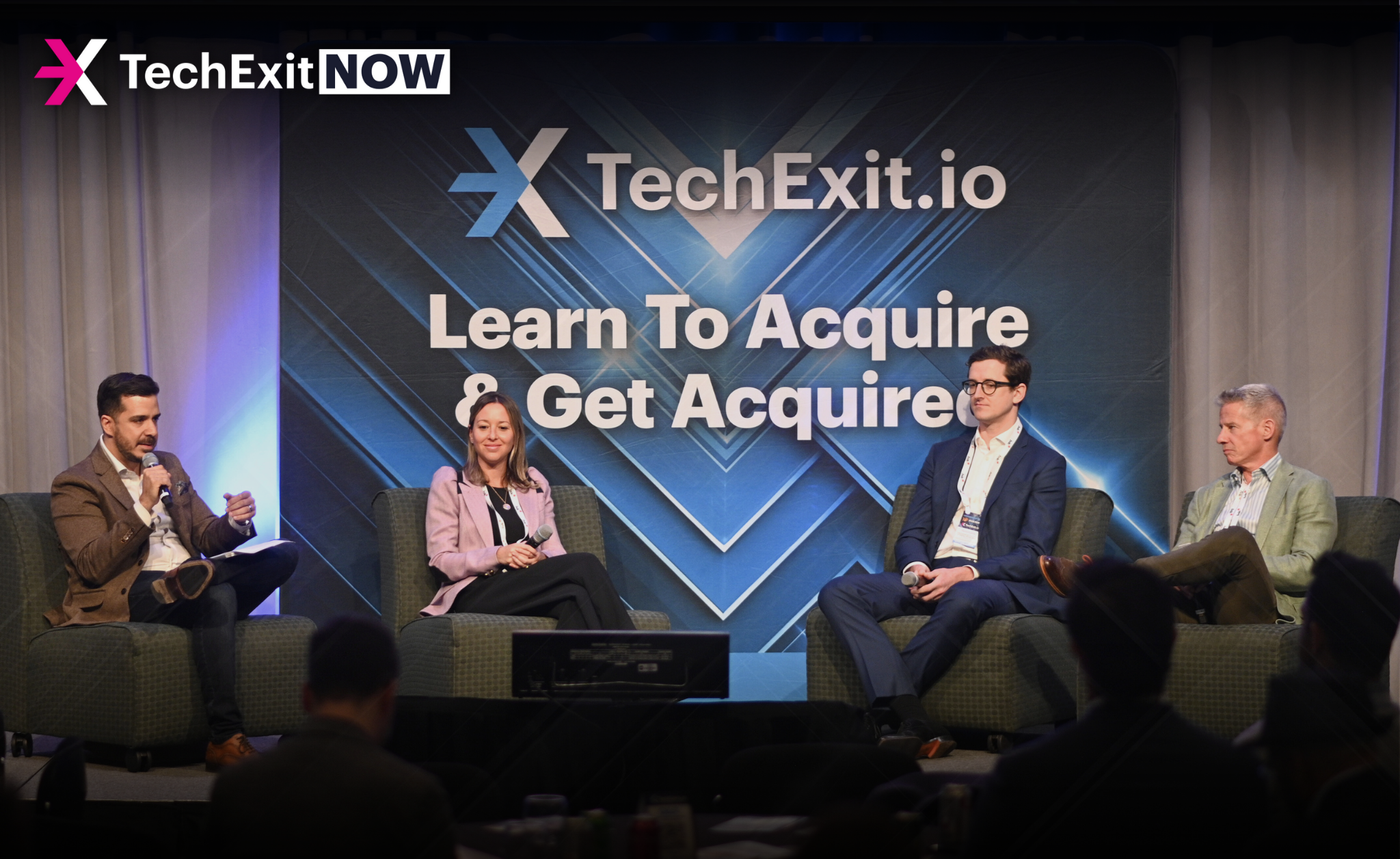
At TechExit.io Toronto, moderator Narbe Alexandrian (Define Capital) led a practical and clear-eyed conversation with Talia Abramowitz (Deloitte Ventures), Mitch Robinson (Sampford Advisors) and Frazer House (BLG). Together, they peeled back the layers on what shapes valuation in today’s deal environment, especially in a market full of economic noise, AI hype and increasingly cautious buyers.
One notion remained consistent throughout, that valuation is shaped by the strategy you build, the decisions you make early and how well you understand what buyers actually care about.
Key takeaways:
- AI only drives value if it’s already delivering meaningful results
- Strategic buyers need to see clear synergy and scale potential
- Investors and acquirers reward clean structure and organized data
- What you walk away with depends heavily on deal mechanics

Buyers Want Proof, Not Potential
“Backing off growth and looking for that path to profitability, that’s what’s driving valuation today,” said Mitch Robinson at the top of the session, setting the tone for the conversation.
The panel was aligned in describing what acquirers and investors are actually rewarding: revenue that sticks, customers that expand and financials that demonstrate stability.
Talia Abramowitz, who leads Deloitte Ventures and corporate development, emphasized that even with a focus on the future of professional services, their acquisition lens is tightly focused on profitable, capital-efficient companies. Finding those targets, she admitted, is rare.
But that’s exactly what gets attention from strategic buyers right now.
AI Doesn’t Impress Anyone Without Evidence
Everyone on stage acknowledged that AI has dominated the narrative for the past 18 months.
But when it comes to valuation, talk alone holds no weight.
Mitch said. “Show me, don’t tell me.”
Companies that simply mention AI in their pitch decks or wrap an LLM around their product aren’t being rewarded for it. In fact, it can raise concerns during diligence if it’s not clearly integrated or defensible.
“Being a consumer of AI doesn’t make you an AI company,” Talia said.
“There needs to be a real moat or proprietary tech.” Buyers aren’t betting on future potential in this environment, they’re measuring current performance.
Strategic Buyers Can Pay More, But Only If It Makes Sense
Strategic buyers have the capacity to go beyond financial multiples.
They’re not just looking at what your company is worth on its own, they’re trying to understand what it could unlock in their ecosystem.
Talia noted that when a founder can clearly demonstrate how their product or service amplifies the reach or revenue of a larger platform, the value conversation shifts. These are the situations where founders often receive offers that exceed intrinsic value.
Mitch expanded on this.
“When the buyer can see a direct path to greater returns through your company, they’re more willing to stretch.”
But that conversation requires work well in advance especially building relationships with potential acquirers and helping them understand the role your company could play in their growth story.
The Cleanest Companies Command The Most Respect
While financial metrics matter, the conversation quickly turned to the foundational details that buyers and investors use to judge whether a company is prepared to be acquired.
Frazer House outlined the basics that often get overlooked: a clean cap table, signed IP assignments and organized governance documents.
“You don’t want to get deep into diligence only to discover that no one agrees how many shares are outstanding,” he said.
Data room quality also came up.
“There’s a strong correlation between disorganized data rooms and deals that don’t close,” Frazer added.
It’s not about perfection, it’s about being clear, consistent and ready when the opportunity shows up.
The Deal You Accept Is Just As Important As The Price You Get
As structured deals become more common, the panel discussed how founders need to go deeper than the headline valuation.
Earnouts, equity rollovers, and time-based payouts are all increasing (and not all of them benefit the seller).
“Cash at close might be all you ever see,” Frazer warned. “If your earnout is based on something you can’t control, you need to discount it heavily.”
Mitch echoed that point.
“You’re partnering with a buyer when you accept these terms. If you’re not confident in their stability or your role in the business post-close, think very carefully before committing.”
This part of the conversation was a reminder that the final number isn’t always what lands in the founder’s pocket and clarity on structure can matter more than price.
Final Word For Founders
Valuation isn’t an external force that just happens to you.
It’s a reflection of how well you’ve built the company, how clearly you can tell the story and how prepared you are to engage with serious buyers.
Talia put it best:
“The companies that stand out are the ones that build optionality. That means flexibility in how they grow, strong partnerships, and a clear view of how they create value.”
If you’re thinking about raising capital, preparing for an exit, or just trying to understand how your company would be valued in today’s market, now is the time to get serious about preparation.
Valuation is something you influence every day through the choices you make, the discipline you apply and the way you run your business.
TechExit.io: Learn how to acquire—or get acquired. Join us at TechExit.io Vancouver to hear the next wave of acquisition stories, meet the dealmakers shaping Canada’s tech landscape, and learn how to build real optionality into your company’s future.