Not every market recovery makes life easier.
Sometimes it simply raises the standard.
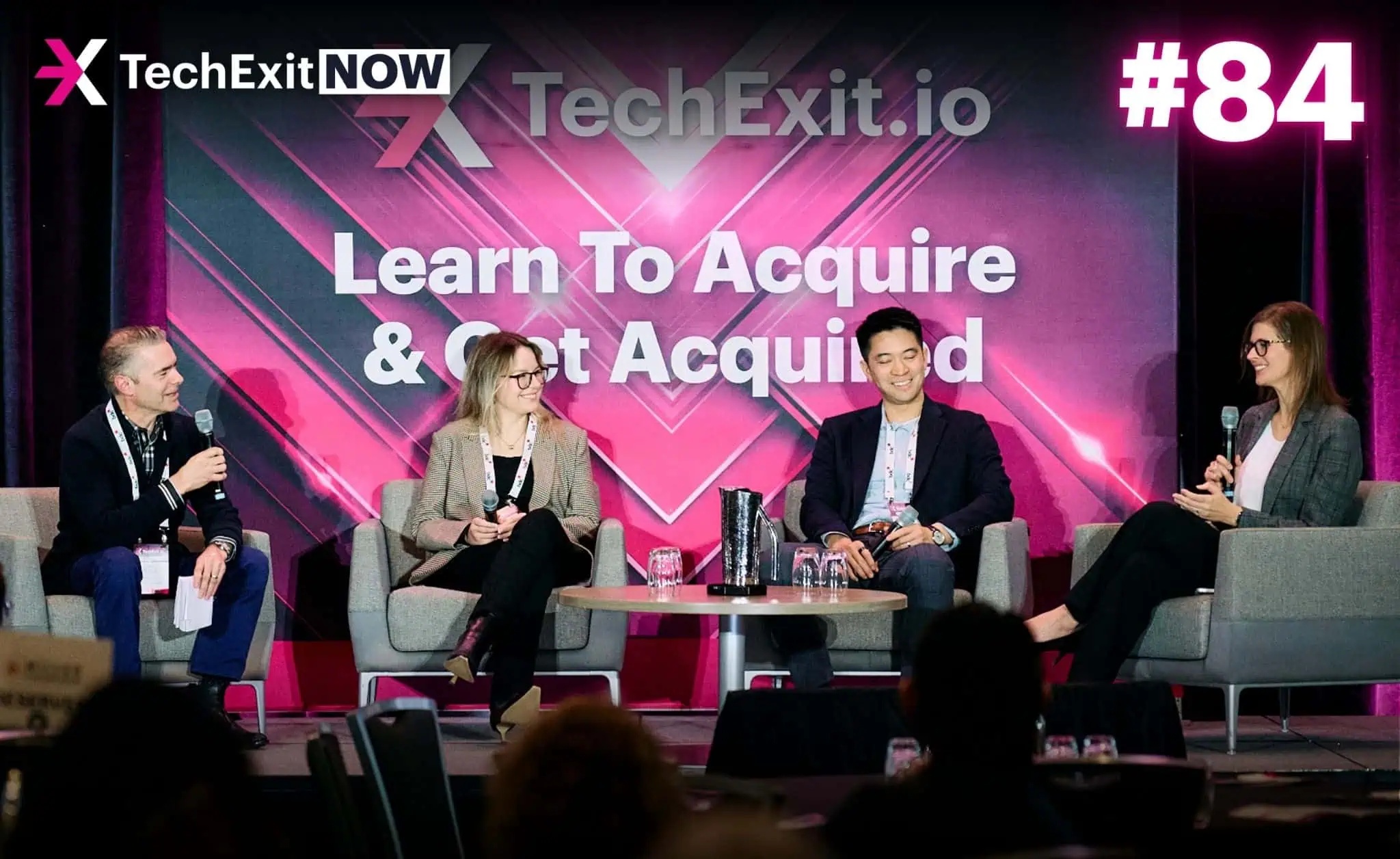
When TechExit.io Vancouver opened in February, Ben Slager, Partner & CEO of Mogan Daniels Slager LLP, sat down with Christen Leinwand (Daniels) from Georgian, Jon Wong of Goldman Sachs and Anastasiya Pasheyeva of JMI Equity to discuss where technology M&A was heading.
Six months later, many of their observations have proved remarkably accurate. Capital is flowing more freely, IPO markets have continued to reopen and AI remains the dominant force shaping technology investment.
Yet, buyers haven’t become less selective. If anything, they’ve become more disciplined about the businesses they choose to back.
Key takeaways:
- Capital has returned, but selectivity has increased.
- Buyers are looking for proof, not promises.
- AI is changing how businesses are evaluated, not just what they build.
- Strong companies are creating more strategic options.

The Market Recovered. Buyer Expectations Didn’t.
Over the past two years, founders have asked the same question: When will the market recover?
The panel’s answer was that the market wasn’t standing still.
Anastasiya pointed to continued investment in AI-native software, while Jon described liquidity returning as IPO markets reopened.
Capital was available again, but it continued flowing disproportionately towards businesses with clear differentiation, durable growth and credible AI strategies.
Christen explained why.
“There is a continued bifurcation of the market… Pools of talent can raise almost as much money as they would like at almost any valuation. Really good companies continue to struggle to a degree.”
The recovery didn’t create a rising tide. It widened the gap between businesses that can clearly demonstrate long-term value and those still asking investors to believe the story.
That’s an important distinction. The conversation has shifted from Can you grow? to Can you prove your growth is durable?
Capital hasn’t disappeared; conviction has simply become harder to earn.
Proof Has Replaced Potential
That shift is changing how buyers approach every transaction.
One or two strong quarters no longer provide enough confidence that performance will last. Buyers are digging deeper into leadership teams, proprietary data, technical architecture and intellectual property, looking for evidence that a business can continue creating value as technology evolves.
As Christen put it: “There’s very little appetite for theory… folks want to invest in real demonstrated proof points.”
That observation extends well beyond fundraising. It influences how businesses prepare for acquisition, how valuations are justified and even when founders choose to begin a sale process.
Stories and vision still matter.
Neither carries the same weight without evidence that customers are adopting the product, staying with it and creating a business that can withstand change. The strongest companies aren’t simply making ambitious claims. They’re giving buyers confidence that success can be repeated.

What Buyers Can’t Afford To Get Wrong
The discussion also highlighted how buyers are thinking differently about acquisitions.
Technology may open the door, but increasingly it’s the people behind the product who determine whether a deal moves forward.
As Ben put it: “People still matter. Keep it human.”
It was a light-hearted moment but it captured a theme that ran throughout the conversation.
Jon spoke about the growing importance of adaptable leadership teams and proprietary data.
Anastasiya described how integration conversations now begin much earlier, with buyers asking how founders, products and teams will fit into the broader business rather than waiting until after a deal closes.
“Just buying something that’s AI native isn’t good enough without the right folks behind it.”
Enterprise value is increasingly being shaped by qualities that are difficult to replicate: experienced leadership, trusted customer relationships, proprietary knowledge and teams capable of adapting as markets evolve. Those aren’t new priorities, but they’re carrying far more weight in today’s market than they did only a few years ago.
The Best Preparation Starts Long Before An Exit
The panel closed with practical advice but it reflected a much broader idea.
Preparation isn’t something founders begin when they’re ready to sell. It’s something they build over years.
Anastasiya encouraged founders to know what they want and have their materials ready. Jon urged them not to avoid conversations simply because the timing didn’t feel perfect. Christen focused on the one thing every founder can control.
“Build the relationships… you’re going to learn something that’s potentially vital for your own roadmap, priorities and strategy.”
Those conversations don’t just create future deal opportunities. They help founders understand how investors think, where strategic buyers are placing value and what expectations are changing long before a transaction is on the table.
Markets will continue to evolve. Technologies will change. Valuation multiples will rise and fall.
Yet the businesses creating the most optionality still share remarkably similar characteristics. They execute consistently, solve meaningful customer problems, invest in exceptional people and build credibility long before an exit becomes part of the conversation.
That’s what continues to define the strongest companies in today’s market, and it’s why those conversations remain at the heart of TechExit.io.
Every event brings together founders, investors and dealmakers to explore what builds enterprise value long before a transaction begins, helping more Canadian companies create the kind of businesses buyers want when opportunity eventually arrives.