A $6.52B acquisition makes headlines, but the twenty years prior tell a far more interesting story.
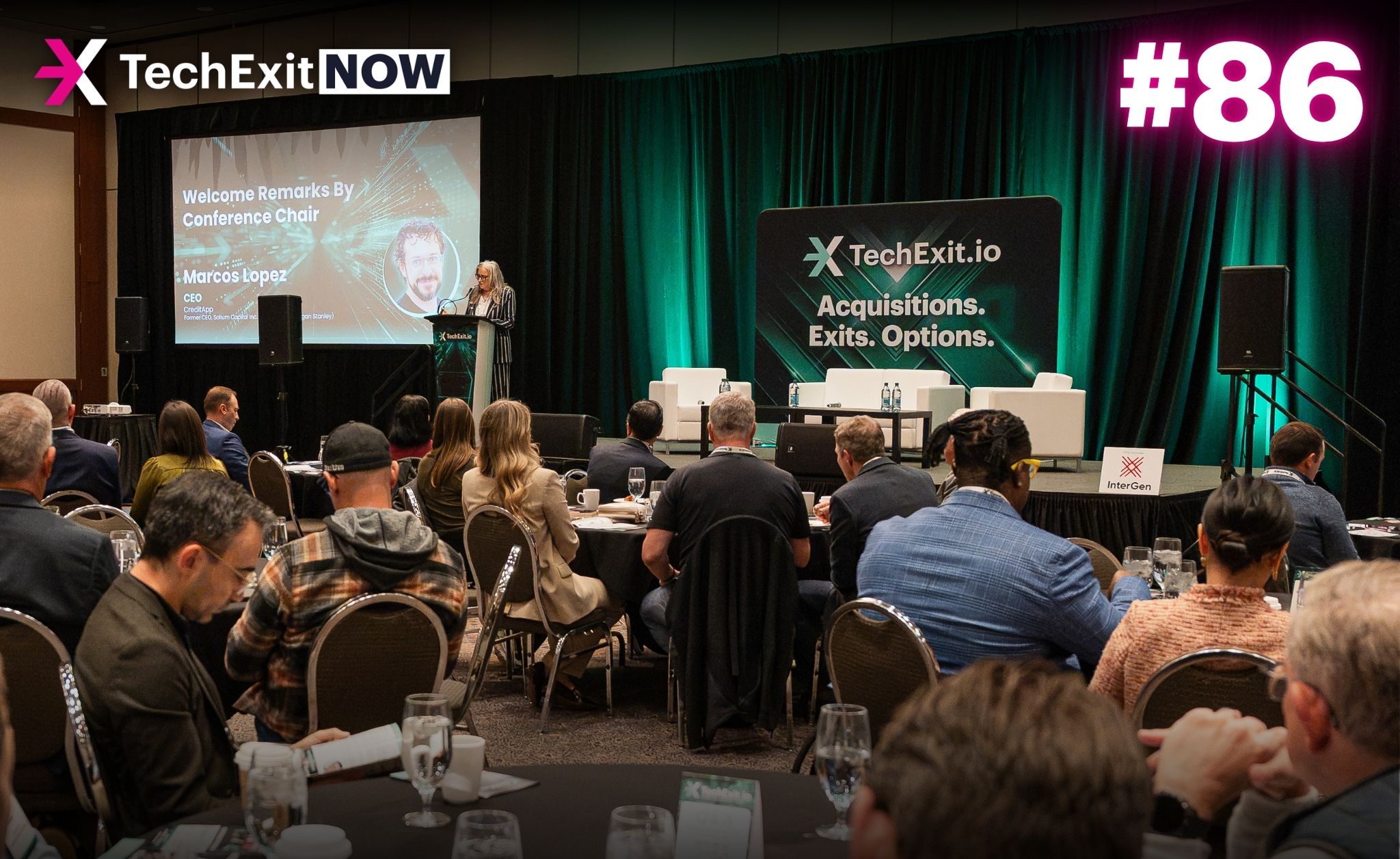
At the inaugural TechExit.io Calgary, founders, investors and advisors shared the lessons behind some of the Prairies’ landmark exits, from Calgary-born CoolIT Systems to Solium’s $1.1B sale to Morgan Stanley.
As our Conference Chair, Marcos Lopez, put it, “Businesses get bought, not sold.”
The day reinforced Sandi Gilbert’s vision of successful exits fuelling the next generation of Prairie businesses, giving founders firsthand insight into the decisions that create lasting value.
Key takeaways:
- Build lasting value. Strong fundamentals create exit opportunities.
- Understand the cost of capital. Valuation isn’t everything.
- Look beyond the sale. People and culture matter after closing.

Twenty Years Behind CoolIT’s $6.52B Exit
For years, liquid cooling was a technology waiting for its moment.
Calgary-born CoolIT Systems started by cooling gaming PCs before moving into high-performance computing and data centres. It was a difficult transition, marked by financing challenges, leadership changes and costly intellectual property disputes. The technology had promise, but the market was taking its time.
Then came the explosion in AI infrastructure.
Brett Durante of CoolIT described the demand that followed as an “absolute hurricane.” Cheri Corbett of Pender Ventures had seen a very different side of the business, backing it when the opportunity was considerably less certain.
The company spent years developing and defending technology that would eventually become central to its competitive position.
Dean Prodan, CoolIT’s Past Chair, reflected on the thinking that sustained the business:
“You cannot just build a company to exit. You need to build a company to be successful.”
After roughly two decades, CoolIT’s journey led through KKR ownership to its $6.52B CAD acquisition by Ecolab.
The valuation made headlines. The years of uncertainty behind it made for a far more revealing conversation.
What Growth Really Costs
Financing a company through those uncertain years brings its own decisions, particularly when founders are balancing growth against ownership.
Duncan Adams of TriWest Capital Partners described investors returning to profitability, cash flow and fundamentals after years of growth-driven SaaS valuations. Ha Nguyen of McRock Capital offered a contrasting picture of AI investment, where significant capital is concentrating around a smaller number of potential category leaders.
Jody Conrad shared how Krux Analytics raised approximately $9M before reaching an enterprise value of roughly $35M. Daniel Gardiner of KPMG explained how dilution and investor preferences can leave founders with surprisingly little from a much larger sale.
Jacques LaPointe of Metiquity Ventures Fund raised another concern: companies that accept inflated valuations can struggle to justify their next funding round.
Tate Hackert had navigated those changing expectations at ZayZoon, which initially raised money from Calgary angels and family offices before bringing in institutional venture investors.
The discussions exposed how differently investors can define success, and how much those expectations can influence a founder’s options years later.

What Makes A Company Worth Buying?
With AI making software faster and cheaper to develop, the question of what makes a business genuinely defensible is becoming more important.
Mitch Robinson of Sampford Advisors offered a useful test:
“A moat is not so much what you might think you’re good at. It’s what makes it really, really hard for a customer to leave you.”
That advantage should be visible in the numbers, whether through retention, pricing power or customer behaviour.
Kevin Swan of Luge Capital pointed to proprietary data and a team’s ability to adapt, while Wilson Acton of Tall Grass Ventures emphasized that competitive advantages need to translate into measurable value.
Michelle Scarborough of Lucid Ventures brought the discussion back to what strategic acquirers are looking for. An established customer base, access to a new market or capabilities that would take years to develop internally can all make an acquisition attractive.
CoolIT’s investment in intellectual property offered one example of an advantage built over time, rather than something a competitor could quickly reproduce.
Building Differently In The Prairies
There was a distinctly regional perspective running through the discussions.
Jaco Burger of Platform Calgary described how Prairie companies have developed an operating advantage shaped by resourcefulness and the financial discipline associated with industries such as energy and agriculture.
That approach was evident in the different growth stories shared on stage.
Reilley Dutchak discussed Vendasta’s decision to move away from a planned IPO when market conditions shifted, choosing instead to raise privately and pursue acquisitions.
Judy Fairburn of The51 and NYA Ventures spoke about maintaining financial discipline even when investment is available, while Christiana Manzocco of Alberta Enterprise Corporation emphasized the importance of pursuing opportunities beyond the region.
Monique Simair, who bootstrapped and exited two businesses, offered a different measure of success. Not every founder wants to build a billion-dollar company, particularly when doing so means surrendering ownership or control.
Her experience broadened the conversation beyond the landmark transactions that tend to dominate headlines, to include profitable businesses, smaller exits and founders who go on to build again.
The Work Behind An Acquisition
Long before a buyer makes an offer, there is work to be done.
Narbe Alexandrian of Define Capital recommended allowing 18 to 24 months to prepare for a potential exit. Financial reporting, intellectual property ownership, customer concentration and governance can all become problems when a buyer begins examining the business.
He also encouraged founders to build relationships with potential acquirers early, rather than waiting until they’re ready to sell.
“The wrong buyer at the right price is still the wrong buyer.”
Mackenzie Regent of Kalos Transaction Advisory estimated spending 30 to 40 hours a week over nine months on diligence, financing and deal structuring. Neil Grunberg of Storytime Capital, who oversaw five acquisitions at AlayaCare, described the importance of involving engineering, HR, customer success and leadership in integration.
The day’s final conversation explored what happens when that work becomes personal.
Following Drivewyze’s acquisition, Brian Heath stayed involved as approximately 300 employees navigated the integration of two similarly sized organizations. Some took on greater responsibility. Others discovered that the positions they expected weren’t available.
“You don’t own the company anymore,” he observed.
Marcos Lopez had experienced similar adjustments when Solium joined Morgan Stanley. The transition into a much larger organization changed decision-making, career progression and the way teams worked.
Both spoke positively about their exits, while acknowledging the challenges that continued well beyond closing.
What’s Next For Calgary?
In her opening remarks, Sandi Gilbert, CEO of InterGen, spoke about the flywheel that successful exits can create for the wider ecosystem.
When founders, early employees and investors gain liquidity, they have the opportunity to put both capital and experience back into the companies being built around them.
Calgary already has examples of what that can achieve, from businesses attracting major international acquirers to founders who have gone on to back and mentor others.
The inaugural TechExit.io Calgary brought those experiences into one room. Beyond the headline valuations were years of difficult financing decisions, strategic changes, negotiations and the responsibility of guiding people through an acquisition.
For founders still building, the opportunity to hear those stories firsthand, including what experienced operators would do differently, was what made the day valuable.
Thank you to everyone who joined us for the inaugural TechExit.io Calgary, to our speakers for sharing their experiences and to our title sponsor InterGen and all our partners for helping bring the conference to the Prairies.
The next generation of Prairie success stories is already taking shape, informed by the experience of those who have built, sold and started again.